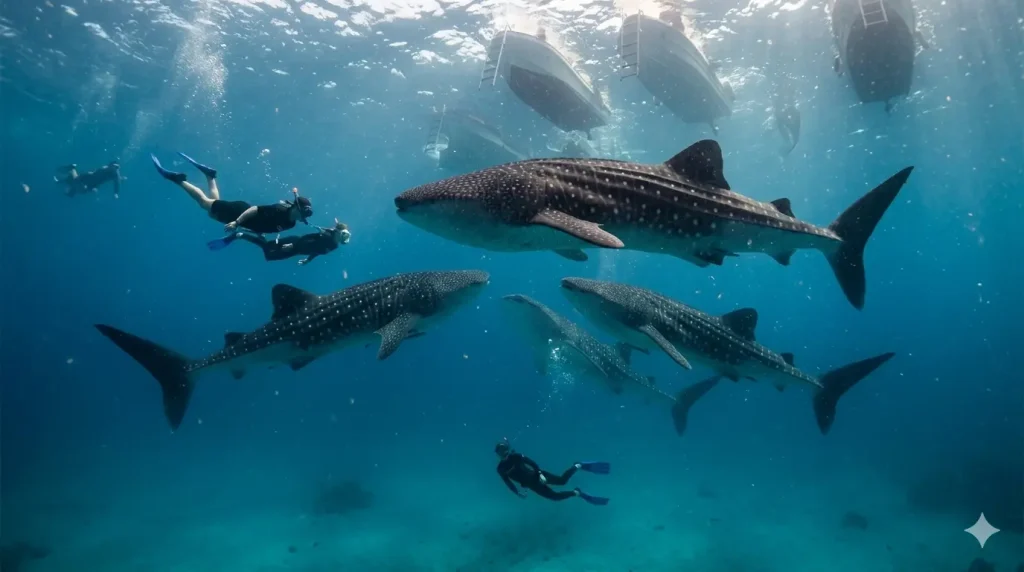
Djibouti is becoming one of the world’s most exciting destinations for whale shark encounters. Every year, travelers visit the Gulf of Tadjourah to swim beside these gentle giants in warm turquoise water surrounded by volcanic landscapes.
Unlike many crowded marine tourism destinations, whale shark experiences in Djibouti still feel raw and authentic. The country’s relatively untouched coastline, clear water, and smaller tourism industry create a far more peaceful atmosphere for snorkeling adventures.
For many travelers, swimming beside a whale shark becomes a once-in-a-lifetime experience. Watching the world’s largest fish glide slowly beneath the surface creates a mixture of excitement, awe, and calmness that is difficult to describe.
This guide explains everything travelers need to know about whale shark season in this beautiful country, including the best months to visit, where to go, how to prepare, what marine conditions to expect, and how to plan a safe and unforgettable adventure.
When Is Whale Shark Season in Djibouti?
Whale shark season in Djibouti usually takes place between November and February. During these months, plankton-rich water attracts whale sharks to the Gulf of Tadjourah near Ras Korali and surrounding coastal areas.
December and January are often considered the peak months for sightings. During this period, marine conditions typically become calmer while visibility improves across several snorkeling locations.
Many travelers choose this season because it also offers more comfortable temperatures compared to Djibouti’s hotter summer months. Consequently, the overall travel experience becomes easier for snorkeling, boat excursions, and coastal exploration.
Although sightings can never be fully guaranteed in nature, Djibouti remains one of the world’s more reliable destinations for seasonal whale shark encounters.
Why Whale Sharks Visit Djibouti During Winter
Whale sharks migrate toward Djibouti because of seasonal plankton blooms in the Gulf of Tadjourah. These microscopic marine organisms become an important food source for the gentle giants.
The warm currents and protected marine environment create ideal feeding conditions during the winter months. As a result, whale sharks often remain close to the surface, which allows snorkelers to observe them more comfortably.
Unlike predatory sharks, whale sharks are peaceful filter feeders. They move slowly through the water while feeding on plankton and small marine organisms near the surface.
Best Months for Whale Shark Sightings in Djibouti
Although whale shark activity may begin in November, December and January usually provide the highest chance of sightings.
During these months:
- sea conditions often remain calmer
- underwater visibility improves
- marine excursions operate more regularly
- temperatures become more comfortable
February can still produce excellent whale shark encounters. However, activity may gradually decrease toward the end of the season.
Best Places to See Whale Sharks in Djibouti
Several coastal regions in Djibouti provide excellent opportunities for whale shark snorkeling. Most tours operate within the Gulf of Tadjourah because of its rich marine ecosystem and favorable water conditions.
Ras Korali Whale Shark Encounters
Ras Korali is one of the most famous whale shark locations in Djibouti. Situated within the Gulf of Tadjourah, the area attracts seasonal plankton blooms that draw whale sharks close to the surface.
Most snorkeling tours depart early in the morning because marine conditions are often calmer during the first half of the day.
The surrounding scenery also makes the experience unforgettable. Volcanic cliffs, dark rocky coastlines, and turquoise water create dramatic contrasts rarely seen in other whale shark destinations around the world.
Whale Shark Snorkeling Near Arta Beach
Arta Beach serves as another important departure point for marine excursions during whale shark season in Djibouti.
The region’s protected waters often provide excellent conditions for beginner snorkelers and first-time whale shark travelers. Consequently, many guided tours choose this area for safer and more comfortable marine experiences.
Travelers frequently combine Arta excursions with nearby coastal sightseeing and beach relaxation.
Gulf of Tadjourah Marine Ecosystem
The Gulf of Tadjourah supports one of the most important marine ecosystems in Djibouti. Beyond whale sharks, the region contains coral reefs, tropical fish, rays, and volcanic underwater formations.
Because tourism pressure remains relatively low, many marine environments still feel natural and largely untouched.
That peaceful atmosphere is one of the reasons many travelers consider Djibouti one of Africa’s most underrated marine adventure destinations.
What to Expect During Whale Shark Season in Djibouti
Many first-time travelers feel both excited and nervous before swimming beside whale sharks. Fortunately, the experience is usually far calmer and more peaceful than most people expect.
Whale sharks are known for their gentle behavior and slow movement through the water. During snorkeling excursions, travelers often observe them feeding calmly near the surface.
Some encounters may last only several minutes. Others continue much longer depending on the whale sharks’ movement and marine conditions that day.
How Close Can You Get to Whale Sharks?
Guides usually encourage travelers to maintain a respectful distance from whale sharks during snorkeling sessions.
In many cases, whale sharks naturally swim surprisingly close to snorkelers without aggressive behavior. However, touching or chasing the animals should always be avoided.
Responsible wildlife interaction helps protect both the whale sharks and the long-term sustainability of marine tourism in Djibouti.
Are Whale Sharks Safe for Snorkelers?
Whale sharks are considered harmless to humans. Unlike predatory shark species, they feed mainly on plankton and small marine organisms.
Most snorkeling experiences focus on calm observation rather than fast-paced marine activity. As a result, even beginner snorkelers can usually participate comfortably under proper supervision.
Guided tours also provide important safety instructions before entering the water.
How to Plan a Whale Shark Trip in Djibouti
Planning properly can significantly improve the whale shark experience in Djibouti. Because marine excursions depend heavily on weather and seasonal conditions, flexibility becomes especially important during travel planning.
Choose the Right Time for Whale Shark Tours
Travelers hoping for the best chance of whale shark encounters should ideally visit between December and January.
During this period, sea visibility, weather conditions, and marine activity usually combine to create the strongest overall snorkeling experience.
Booking several days in Djibouti instead of relying on a single excursion day also improves the chances of successful sightings.
Book Guided Whale Shark Tours Early
Whale shark season attracts increasing numbers of adventure travelers each year. However, Djibouti still has a relatively small tourism industry compared to larger marine destinations.
Because of this, quality tour availability may become limited during peak season.
Booking guided whale shark tours early is strongly recommended, especially for travelers visiting during December and January.
Physical Fitness and Swimming Requirements
Most whale shark excursions do not require advanced swimming ability. However, basic comfort in open water remains important.
Snorkelers may occasionally need to enter the water quickly from boats depending on whale shark movement and sea conditions.
Travelers who feel less confident in the water can usually request flotation support from tour operators.
What to Pack for Whale Shark Experience in Djibouti
Preparing the right equipment can make the experience far more comfortable, especially during long hours under strong coastal sunlight.
Essential Gear for Whale Shark Excursions
Travelers should bring:
- reef-safe sunscreen
- UV-protection clothing
- sunglasses
- waterproof dry bag
- reusable water bottle
- snorkeling equipment if preferred
- underwater camera
Many tours provide snorkeling gear. However, experienced travelers often prefer using their own mask and fins for better comfort.
Prepare for Strong Sun and Heat
Even during winter months, Djibouti’s coastal climate can feel extremely warm during midday hours.
Long boat rides across open water increase sun exposure significantly. Consequently, hydration and sun protection quickly become essential throughout the excursion.
Whale Shark Photography Tips in Djibouti
Whale shark season in Djibouti creates excellent opportunities for underwater photography. Clear water and surface-level encounters often allow travelers to capture remarkable marine images without scuba diving equipment.
However, underwater photography during whale shark excursions can become surprisingly challenging for first-time travelers.
Best Camera Settings for Whale Shark Photography
Wide-angle lenses usually work best because whale sharks are extremely large animals.
Fast shutter speeds also help capture movement more clearly, especially when snorkeling in changing light conditions near the surface.
Respect Wildlife While Taking Photos
Many travelers become excited during whale shark encounters and try to swim too closely for photographs. However, responsible behavior remains extremely important during marine wildlife experiences.
Avoid blocking the whale shark’s movement or chasing the animal for better images. Calm observation often creates the most natural and memorable photography opportunities.
Responsible Whale Shark Tourism and Conservation
As whale shark tourism continues growing in Djibouti, protecting the marine ecosystem becomes increasingly important.
Whale sharks are vulnerable animals despite their enormous size. Consequently, responsible tourism practices help preserve these encounters for future generations.
Guided operators usually encourage:
- respectful observation
- safe snorkeling distance
- no touching
- no feeding
- environmentally responsible behavior
Travelers also play an important role in protecting coral reefs and marine biodiversity throughout the Gulf of Tadjourah.
Combine Whale Shark Tours with Other Djibouti Adventures
One of the best parts of visiting Djibouti is how easily marine adventures combine with other extraordinary landscapes across the country.
Many travelers combine whale shark excursions with:
- Lake Assal tours
- Moucha Island snorkeling
- Tadjourah beach trips
- Lake Abbé expeditions
- desert safaris
- volcanic landscapes
This combination of marine and desert experiences makes Djibouti feel completely different from most traditional beach destinations.
Within only a few days, travelers can swim beside whale sharks, cross volcanic salt flats, and explore surreal desert scenery rarely found elsewhere in Africa.
Why Whale Shark Season in Djibouti Feels So Unique
Many whale shark destinations around the world have become heavily commercialized over time. Djibouti still feels different.
Instead of crowded boats and large tourism infrastructure, travelers often experience quieter coastlines, smaller groups, and a stronger sense of exploration.
That feeling becomes especially powerful during early morning excursions across the Gulf of Tadjourah. Watching whale sharks appear beneath crystal-clear water while volcanic mountains rise along the horizon creates an experience that feels both peaceful and unforgettable.
For travelers searching for authentic marine adventure travel, whale shark season in Djibouti remains one of the most remarkable experiences in East Africa.
FAQ About Whale Shark Season in Djibouti
When is whale shark season in Djibouti?
Whale shark season in Djibouti usually runs between November and February, with December and January often producing the best sightings.
Where can you see whale sharks in Djibouti?
Most whale shark tours operate around Ras Korali, Arta Beach, and the Gulf of Tadjourah.
Is whale shark snorkeling safe in Djibouti?
Yes. Whale sharks are gentle filter feeders and are considered harmless to humans when approached responsibly.
Do you need scuba diving experience to swim with whale sharks?
No. Most whale shark excursions in Djibouti are snorkeling tours suitable for beginners.
What should you bring for a whale shark tour in Djibouti?
Travelers should bring sun protection, water, lightweight clothing, snorkeling gear if preferred, and waterproof protection for electronics.

 Français
  English